
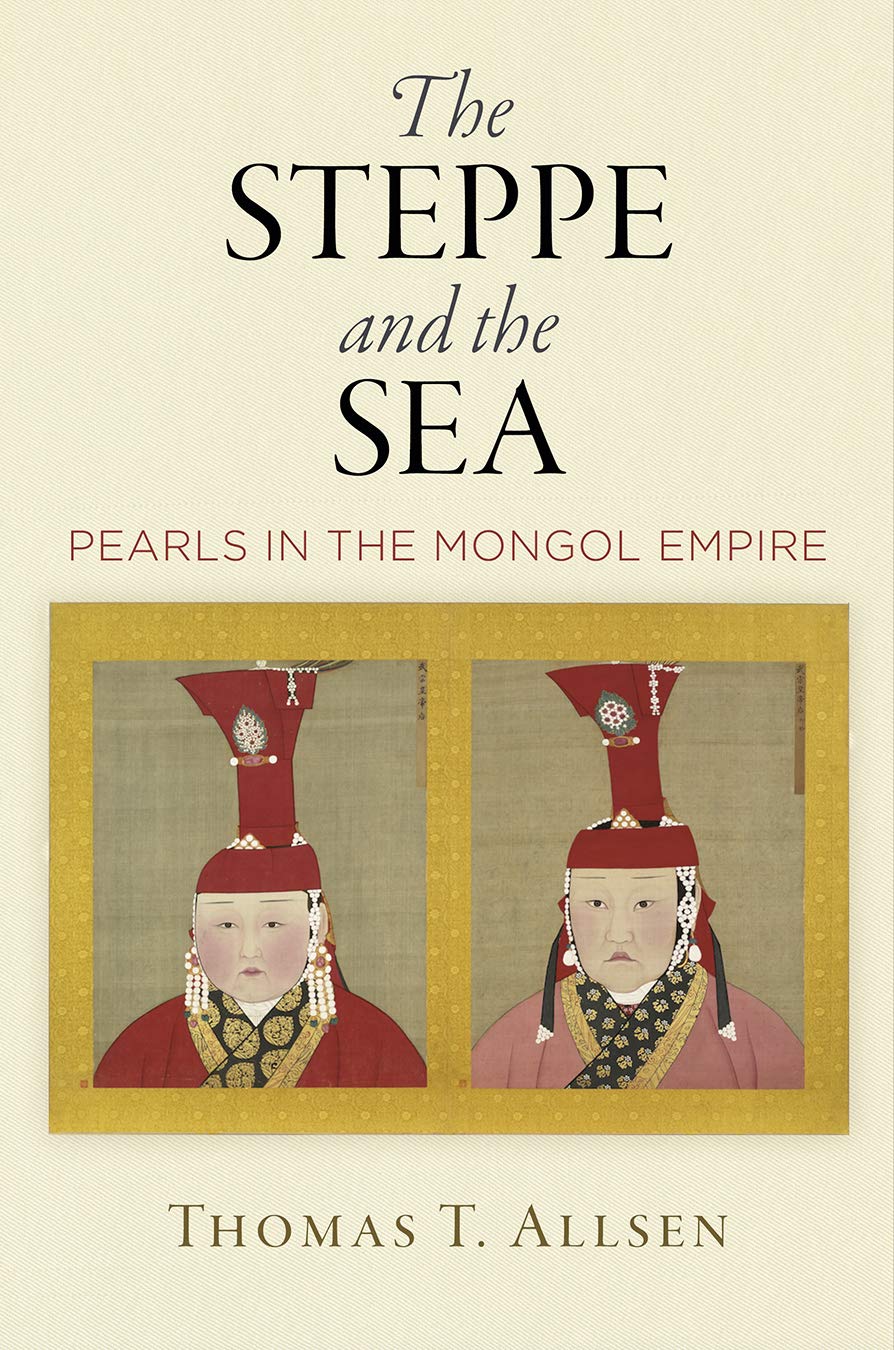
The Steppe and the Sea: Pearls in the Mongol Empire (Encounters with Asia)
Product details
| Management number | 231915066 | Release Date | 2026/06/18 | List Price | $13.61 | Model Number | 231915066 | ||
|---|---|---|---|---|---|---|---|---|---|
| Category | |||||||||
In 1221, in what we now call Turkmenistan, a captive held by Mongol soldiers confessed that she had swallowed her pearls in order to safeguard them. She was immediately executed and eviscerated. On finding several pearls, Chinggis Qan (Genghis Khan) ordered that they cut open every slain person on the battlefield. Pearls, valued for aesthetic, economic, religious, and political reasons, were the ultimate luxury good of the Middle Ages, and the Chingissid imperium, the largest contiguous land empire in history, was their unmatched collector, promoter, and conveyor. Thomas T. Allsen examines the importance of pearls, as luxury good and political investment, in the Mongolian empire—from its origin in 1206, through its unprecedented expansion, to its division and decline in 1370—in order to track the varied cultural and commercial interactions between the northern steppes and the southern seas.Focusing first on the acquisition, display, redistribution, and political significance of pearls, Allsen shows how the very act of forming such a vast nomadic empire required the massive accumulation, management, and movement of prestige goods, and how this process brought into being new regimes of consumption on a continental scale. He argues that overland and seaborne trade flourished simultaneously, forming a dynamic exchange system that moved commodities from east to west and north to south, including an enormous quantity of pearls. Tracking the circulation of pearls across time, he highlights the importance of different modes of exchange—booty-taking, tributary relations, market mechanisms, and reciprocal gift-giving. He also sheds light on the ways in which Mongols' marketing strategies made use of not only myth and folklore but also maritime communications networks created by Indian-Buddhist and Muslim merchants skilled in cross-cultural commerce.In Allsen's analysis, pearls illuminate Mongolian exceptionalism in steppe history, the interconnections between overland and seaborne trade, recurrent patterns in the employment of luxury goods in the political cultures of empires, and the consequences of such goods for local and regional economies. Read more
| ASIN | B084YRQ5TM |
|---|---|
| XRay | Not Enabled |
| ISBN13 | 978-0812295900 |
| Language | English |
| File size | 12.7 MB |
| Page Flip | Enabled |
| Publisher | University of Pennsylvania Press |
| Word Wise | Not Enabled |
| Print length | 241 pages |
| Accessibility | Learn more |
| Screen Reader | Supported |
| Part of series | Encounters with Asia |
| Publication date | May 3, 2019 |
| Enhanced typesetting | Enabled |
Bestseller ranking
Body spray and hair mist






Customers who viewed this product also viewed
New Testament Study
Correction of product information
If you notice any omissions or errors in the product information on this page, please use the correction request form below.
Correction Request Form